Aqaba and Iraq: a wartime windfall does not make a permanent corridor
Opinion · The war turned Aqaba into a lifeline for Iraqi trade. Jordan should seize the chance without mistaking a windfall for a new normal.

Key points
- Iraq-bound containers through Aqaba rose from under 5,000 TEU to more than 56,000 TEU in nine months.
- The war changed the cost of Gulf risk, not the distance or handling cost that favour Iraq's own ports.
- Bulk grain and Iraq's own bypass projects point back toward Basra and Umm Qasr.
- Contracts, insurance and Jordanian incentives mean Aqaba will keep more than it had before the crisis.
- Jordan should invest in faster customs and border capacity, not in heavy assets built for wartime volumes.
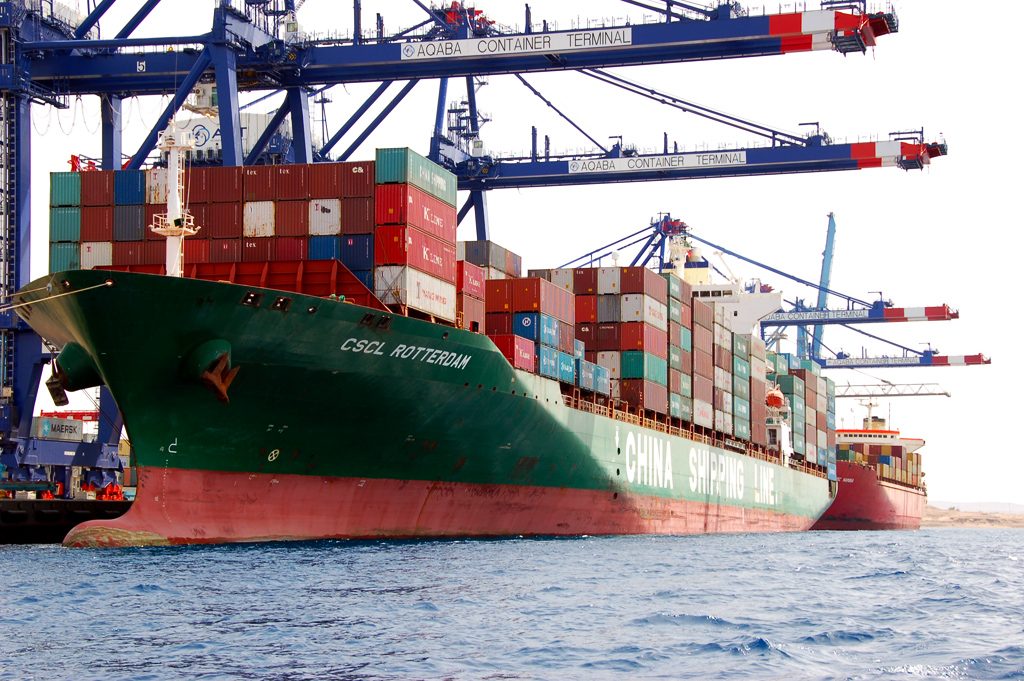
In just nine months, the port of Aqaba has gone from a marginal stop in Iraq's trade to one of its main arteries. Iraq-bound containers through Jordan's only port jumped from fewer than 5,000 TEU to more than 56,000. In October, Aqaba Container Terminal set a monthly record it had never seen before, with about 1,500 trucks leaving the gates every day.
The reason is no secret. The Strait of Hormuz is no longer a safe passage, and the US blockade of Iranian ports is still in force. Goods that used to enter Iraq through Basra and Umm Qasr are now landed in Aqaba and driven roughly 760 km to the border.
These numbers deserve to be celebrated. They also deserve some caution.
Trade takes the cheapest road
Trade naturally follows the shortest and cheapest route. Basra and Umm Qasr sit inside Iraq. They need no long road haul and no border crossing at Karameh-Trebil. The war did not change the distance or the cost of handling. It changed only the cost of risk on the Gulf route. When that cost returns to normal, traders' calculations will return with it.
Grain is a clear example. The multipurpose port handled about 1.67 million tonnes of transit grain, up from almost nothing. Bulk commodities are loyal to no port. They move week by week to wherever it is cheapest, and they will be the first to go back to Iraq's own ports.
Baghdad, too, is planning routes that bypass Hormuz without passing through Jordan. It has restarted the Kirkuk-Ceyhan pipeline to Turkey and announced a line from Basra to Haditha. These are oil projects first, but they show where Iraqi planning is heading: north and west, through its own territory. The long-discussed Basra-Aqaba pipeline has not moved.
Aqaba will not go back to where it was
Companies that built Aqaba into their supply chains this year now have contracts, warehouses and trucking relationships in Jordan, and these are not undone overnight. Insurers will not forget the Gulf's risks quickly. Jordan is offering discounts on transit fees, has expanded vehicle storage from 6,000 to 17,000 units, and is talking about faster port expansion, the Aqaba-Shidiya-Ma'an railway and a dry port at Ma'an.
Most importantly, Iraqi importers learned a lesson this year: a single maritime gateway is a weakness. Some will keep Aqaba as a second route even at a higher cost, the way one keeps a spare key to the house.
The real risk
The real risk is not that volumes will fall. They will fall when Hormuz reopens. The risk is treating this year's figures as the new normal: writing them into the 2027 budget, borrowing against them, or pouring money into heavy fixed assets built for traffic that may not stay.
The investment that pays off either way is lighter and smarter: faster customs, shared data with the Iraqi side, pre-clearance, and borders that work without queues. These serve Aqaba today and will still matter tomorrow, when competition with Umm Qasr returns.
The war has given Aqaba a rare chance to prove itself to Iraqi traders. What remains after the war will not be decided by exceptional numbers, but by the speed, cost and reliability of the service. That is where the corridor will be won or lost.