Will Jordan execute the Amman and Hamoud attackers? What June's hangings tell us about timing
Four death sentences in ten days for two attacks. The courts will uphold them; the executions are a political decision, and the June precedent points to years, not months.

Key points
- Jordan's State Security Court sentenced the 5 November Amman attacker to death on 25 November, ten days after three death sentences for the Hamoud church attack.
- We expect the Court of Cassation to uphold the sentences, but put the chance of an execution before the end of 2027 at 30%.
- June's executions of the Salt cell came 40 months after sentencing; that precedent points to 2028 for the new cases.
- The Amman attacker was released days before the attack after an ISIS-linked conviction, exposing a post-release monitoring gap.
- Watch the Cassation ruling in the Hamoud case and the passage of the terrorism and correctional centres amendments.
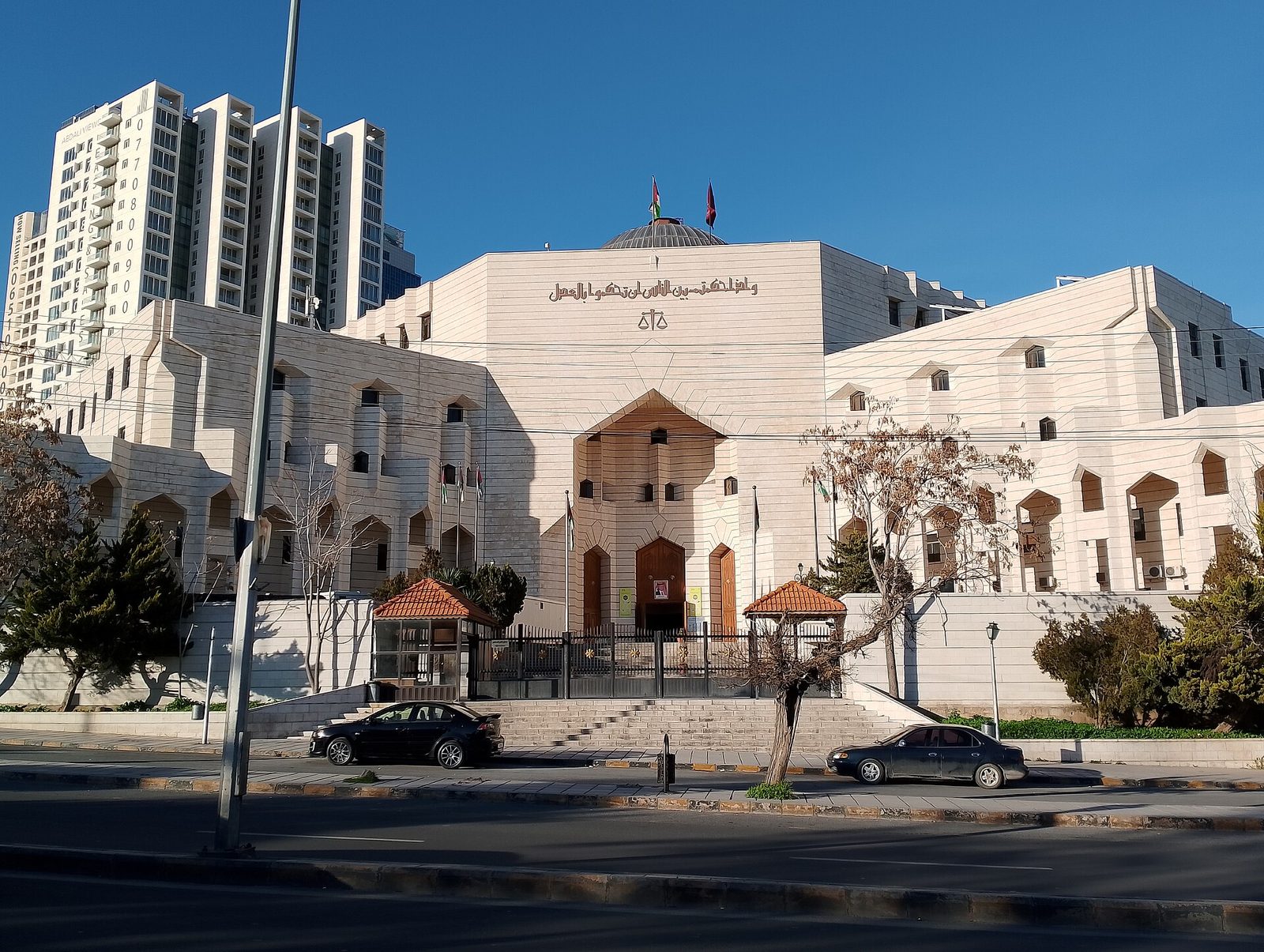
On Wednesday morning Jordan's State Security Court sentenced to death the man who killed Corporal Jawad Al-Salaytah outside the Sri Lankan embassy in Amman on 5 November and wounded Captain Firas Al-Ananzeh. He was convicted on two counts under the Anti-Terrorism Law No. 55 of 2006. Ten days earlier, on 15 November, the same court sentenced three men to death for the 23 October shooting at a funeral in Saint George's Orthodox Church in Hamoud, Karak governorate, which killed nine people. Four death sentences for two attacks in one month is a sharp break with the court's record: according to the National Center for Human Rights, it issued no new death sentences between 2022 and 2024.
My judgement: the Court of Cassation will uphold the sentences, but the executions will not come quickly. I put the probability that any of the four men is executed before the end of 2027 at 30%, and the probability that the sentences are carried out within four years at 70%. The decision that matters is no longer judicial. It is political, and the state has already shown in June that it is willing to take it.
What we know
| Fact | Source | Rating |
| Death sentence for the 5 November Amman attack, issued 25 November; automatic review by the Court of Cassation | Jordan News; Reuters; The National | A1 |
| Three death sentences for the Hamoud church attack (nine killed) | Reuters; The National | A1 |
| The Amman attacker was serving a nine-year sentence (2022) for an ISIS-linked plot in Irbid and was released days before the attack | The National, citing pro-government media; Asharq Al-Awsat | B2 |
| Six men hanged on 21 June 2026, the first executions since March 2017, all in cases where security personnel were killed | Human Rights Watch; Death Penalty Information Center | A1 |
| Execution requires Cassation confirmation, cabinet endorsement and a royal decree | Government statement, via HRW | A1 |
| Cabinet approved on 22 November draft amendments to the terrorism, correctional centres and juvenile laws, sent to parliament as urgent | Petra, via MENAFN | A2 |
Why the sentences will stand
The legal case is narrow. Both attacks were filed under Article 7 of the Anti-Terrorism Law, which carries the death penalty where a terrorist act results in death. The Amman attacker was arrested at the scene, and the Hamoud case rests on a cell whose communications, according to Asharq Al-Awsat, included a list of further targets. The Court of Cassation reviews every death sentence automatically, and that review is a real step, not a formality. But with an arrest at the scene, a clear statutory basis and the state's public commitment, I see little room for a reversal on the merits. I expect confirmation within the next year.
Why the executions will be slow
The June executions are the best guide to timing. Two of the six men hanged on 21 June belonged to the Salt cell, whose attacks on security forces took place in August 2018. The State Security Court sentenced its members to death on 22 February 2023. Execution followed 40 months later. A second terrorism case executed in June concerned a December 2022 ambush in Maan. On that precedent, the realistic window for the Amman and Hamoud cases opens in 2028, not 2027.
There is also a queue. The National Center for Human Rights counted 276 people under sentence of death at the end of 2024. Amnesty International put the figure at no fewer than 200 at the end of 2025. When the government announced the June executions, it said further sentences would be carried out in succession. The state chose cases involving the killing of security personnel. The four men sentenced this month fit that profile exactly, which places them high in the queue but not ahead of cases already through Cassation.
Why politics may accelerate it
Three pressures push towards a shorter timeline. The King ordered security forces to respond with an "iron fist" after Hamoud. Parliament's Speaker, Ibrahim Tarawneh, announced on 9 November a full review of terrorism legislation and pledged to fast-track the government's amendments. And the Amman case has exposed a specific failure: a man convicted for an ISIS plot walked out of prison and killed a police officer within days. The state needs to show that the justice system closes that gap. Executions are one way to show it; the new post-release regime of electronic monitoring and house arrest is another, and is the more durable answer.
Two pressures push the other way. Executions bring international criticism, which Human Rights Watch renewed in June when it called on Jordan to restore its moratorium. And the state has an interest in keeping the death penalty as a signal of resolve rather than spending it at once.
Scenarios
- Measured sequence (55%). Cassation upholds the sentences in 2027; executions follow in 2028 or later as part of a wider batch. Policy attention shifts to the new monitoring regime for released convicts.
- Accelerated signal (30%). A further attack or a sharp public reaction moves at least one case forward, and an execution takes place before the end of 2027.
- Commutation or indefinite delay (15%). Cassation reduces one or more sentences, or the files remain unexecuted for more than four years, as during the unofficial moratorium between 2006 and 2014.
What to watch
- The date of the Court of Cassation ruling in the Hamoud case, which was sentenced first.
- Whether parliament passes the amended Prevention of Terrorism Law and Correctional and Rehabilitation Centers Law in the current ordinary session.
- Any official statement that links future executions to the security file, as the June announcement did.
- New arrests of released terrorism convicts, which would indicate that the monitoring gap is wider than one case.
What it means for institutions
For embassies, international organisations and companies operating in Jordan, the sentences confirm that the state is treating the October and November attacks as a security emergency, not as isolated crimes. Expect tighter screening around diplomatic sites and places of worship, more security raids, and a longer period of heightened visible policing. For donors working on prison reform and rehabilitation, the new correctional centres law is the file to engage with now: the political space for rehabilitation exists only if it is presented as part of the state's security response.
Next update: when the Court of Cassation rules on the Hamoud case, or if parliament passes the terrorism amendments, whichever comes first.