Did the Houthis hit Ras Tanura? What the drone attack means for Saudi oil exports
Riyadh says four drones were destroyed over its largest refinery. Smoke over the complex says the question is not closed. Here is what is known, and what it means for Gulf supply.

Key points
- The Saudi-led coalition says air defences destroyed four drones over Ras Tanura on 25 November; the Houthis say they set the refinery on fire.
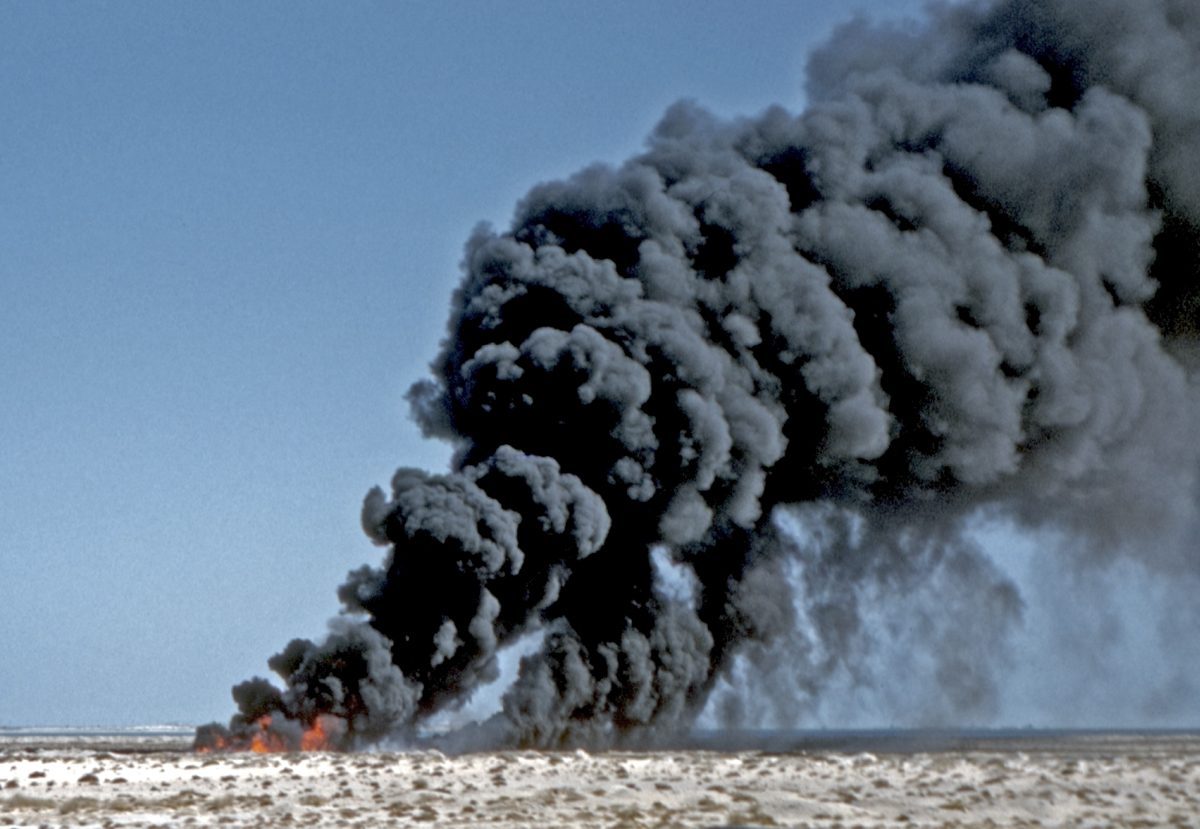
- Satellite imagery reviewed by Reuters showed thick black smoke over roughly 600 square kilometres around the complex. Aramco has not confirmed damage or a shutdown.
- Our assessment: about a 25% chance that Aramco or the Saudi government confirms a refinery outage linked to this attack before 31 December.
- Ras Tanura refines about 550,000 barrels a day and its terminal can load about 6.5 million; a terminal outage matters far more than a refinery fire.
- Brent moved less than 1% on the day. Markets are pricing a surplus, not a Saudi supply loss.
On Wednesday 25 November the Saudi-led coalition said its air defences had destroyed four drones over Ras Tanura, on the Gulf coast of the Eastern Province, and three more elsewhere in the province, with debris falling and no initial casualties. Hours earlier the Houthi military spokesman, Yahya Saree, said the group had attacked the Ras Tanura refinery and caused fires, a day after a drone hit a tower in Riyadh's financial district and wounded 11 people.
My judgement: for the Gulf, the attack matters less for the barrels it may have cost than for what it says about the Houthi target list, which now runs from the Red Sea ports to the Gulf coast. I put the chance that Aramco or the Saudi government confirms an outage at the refinery linked to this attack before 31 December at about 25%. The more likely reading is limited damage from intercepted drones and debris, handled quietly, as in March.
What we know
| Claim | Source | Rating |
|---|---|---|
| Four drones destroyed over Ras Tanura, three more in the Eastern Province, no initial casualties | Coalition spokesman Turki al-Maliki | B2 |
| Houthis attacked the refinery and caused fires | Houthi spokesman Yahya Saree | D3 |
| Thick black smoke over roughly 600 sq km around the complex | NASA Worldview imagery reviewed by Reuters | B2 |
| No confirmation of damage or shutdown | Aramco, which did not respond to Reuters | A2 |
| Refinery capacity of about 550,000 b/d; terminal loading capacity of about 6.5 million b/d | US EIA; The National | A1 |
Smoke is not damage. Debris from intercepted drones started a limited fire at the same refinery in early March, and Aramco shut the plant as a precaution before restarting it in mid-March. Smoke on that scale, however, is harder to explain by debris alone, which is why the question stays open until Aramco speaks or new imagery appears.
Why the refinery and the terminal are different questions
Ras Tanura is Saudi Arabia's oldest and largest domestic refinery, at about 550,000 barrels a day, roughly 16% of Aramco's domestic refining capacity. A refinery outage hits Saudi fuel supply and product exports, and it can be covered from other plants within weeks.
The adjoining export terminal is a different scale of asset. It can load about 6.5 million barrels a day, and it only resumed crude loadings on 26 June after a halt of nearly four months. A sustained terminal outage would remove a large share of Saudi seaborne exports from the Gulf side and push more volume onto the East-West pipeline to the Red Sea, which was itself hit by a drone on 10 September and ran at about 5.5 million barrels a day after repairs. That is the scenario markets should watch, and the one the evidence does not yet support.
Why the market barely moved
Brent traded at $90.96 on Wednesday morning, down 44 cents, before recovering to about $92 later in the session. That is a muted response to a claimed strike on the kingdom's largest refinery. Two reasons stand out. The International Energy Agency's November report puts the fourth quarter in a surplus of 1.7 million barrels a day. And traders have learned in 2026 that Saudi facilities recover fast: the March shutdown lasted about two weeks.
The Houthi campaign has also widened the range of targets without yet changing Saudi output. Strikes this month have reached Riyadh's financial district twice, and the group threatened Jeddah and other Red Sea ports after coalition strikes on Hodeidah. The pattern is pressure on Saudi economic confidence, not a campaign the Houthis can sustain against hardened oil infrastructure.
Three scenarios to 31 December
- Contained (60%). Aramco reports no material damage or a brief precautionary halt. Brent stays in the $85 to $95 range and the Houthis keep claiming strikes on Riyadh and the Eastern Province.
- Confirmed refinery outage (25%). Aramco confirms damage and a shutdown of weeks. Product markets in the Gulf tighten; crude exports are not affected; Brent gains $2 to $4.
- Terminal disruption (15%). A strike or repeated attacks halt loadings at the Ras Tanura terminal for more than a day. Brent moves above $100 and Gulf shipping insurance rises again.
What to watch
- Any Aramco filing or Saudi Energy Ministry statement on Ras Tanura operations.
- New satellite imagery of the refinery and the Ras Tanura loading berths.
- Tanker-tracking data on loadings from Ras Tanura in the next ten days.
- Whether the Houthis back the claim with video or imagery of the strike.
- The OPEC+ meeting on 29 November, where any Saudi statement on capacity will be read closely.
What it means for organisations
For Gulf and Jordanian importers of refined products, the near-term risk is price, not physical shortage. For companies with staff in the Eastern Province, the attack confirms that the Houthi range now covers the whole kingdom, and travel and site security plans should assume repeated drone alerts through December. For energy buyers, the signal to act on is the terminal, not the refinery.
Next update: when Aramco or the Saudi government states the operating status of Ras Tanura, or after the OPEC+ meeting on 29 November.